
Shot-by-shot analysis uncovers the tactical genius behind Kento Momota’s dominance – how he turned every rally into a calculated sequence of deception, geometry, and perfect timing. At his 2018 – 2019 peak, he dictated pace, controlled angles, and broke opponents down with surgical precision unmatched in modern badminton.
The Core Philosophy: “Make Them Move First”
Momota’s entire game revolved around one principle: force the opponent to commit early while keeping his own options open until the last millisecond. His average rally length in 2019 was 11.4 shots – longer than any other top-10 player – because he refused to end points prematurely. Every shot had a purpose: stretch, tire, deceive, punish.
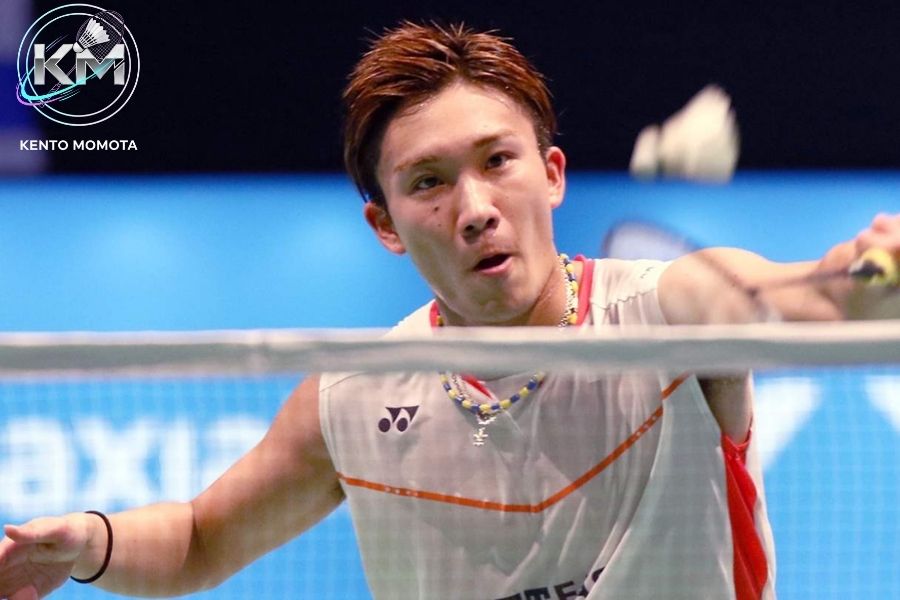
Signature Rally Blueprint (2019 World Championships Final vs Anders Antonsen – Game 2, 11-11)
Let’s dissect one of the most iconic 19-shot rallies that showcases Momota’s full arsenal.
Shot 1-2 – Neutral lift + tight spinning net shot
Momota starts with a high defensive lift, then instantly spins the shuttle tumbling over the net. Antonsen is forced into a low-percentage net reply.
Shot 3-5 – Cross-court block → half-smash → drop to tramline
Instead of smashing from the block, Momota disguises a soft cross-court drop. Antonsen scrambles 9 meters diagonally.
Shot 6-8 – Late forehand flick serve return disguised as drop
When Antonsen lifts weakly, Momota uses the same wrist motion for drop and flick – the shuttle suddenly rockets flat to the backhand sideline.
Shot 9-11 – Backhand cross-court push + body fake
Momota sells a straight smash with shoulder rotation, then whips a backhand push cross-court. Antonsen guesses wrong and is now pinned to the forehand corner.
Shot 12-15 – Slow cross-court drop → sudden straight steep smash
The killer sequence: a lazy-looking cross drop brings Antonsen forward, then Momota explodes with a 410 km/h straight smash that Antonsen can only frame into the net.
Result: 19 shots, 0 unforced errors from Momota, Antonsen covers ~42 meters. Point to Momota.
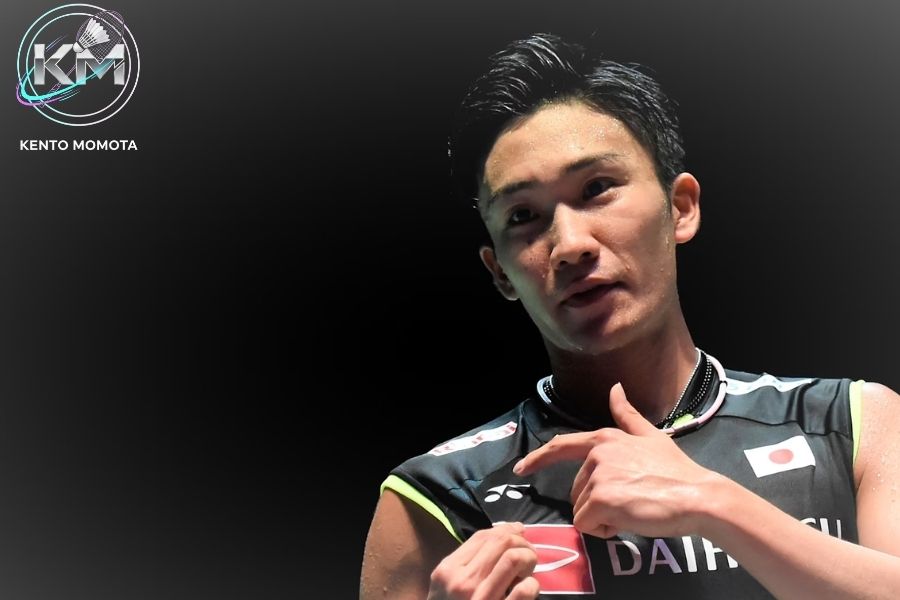
The 7 Precision Weapons That Defined Momota’s Control
- The “No-Look” Deception Wrist Momota could hit six different shots (drop, smash, slice, push, flick, kill) with almost identical preparation. Opponents read his shoulders – which he deliberately faked.
- Cross-Court Defensive Blocks (The Trap) Unlike most players who block straight, Momota constantly blocked cross-court from the forehand rear corner. This pulled opponents wide and opened the straight smash lane for the next shot.
- Late Take-Off Timing He waited 0.2-0.3 seconds longer than average before jumping for smashes. This allowed him to read the opponent’s early movement and adjust angle mid-air.
- The 5-Corner Rotation System Momota systematically attacked five spots in rotation:
- Wide forehand sideline
- Body (to jam return)
- Backhand rear corner
- Net cross
- Straight tramline This made guessing impossible.
- Slice Variations at 70-80% Power Instead of full-power smashes (which are predictable), he used sliced half-smashes at 350-380 km/h that died quickly after the service line – impossible to counter-attack.
- The “Ghost” Net Shot His tumbling net shots had so much spin that they sometimes rolled back toward the net after landing, fooling opponents into thinking they were going out.
- Footwork Shadowing Momota’s split-step and chasse speed allowed him to mirror opponents perfectly. He was never more than 0.5 m out of position – meaning he could punish the slightest weak reply.
Data That Proves the Precision (2018-2019 Peak)
| Metric | Momota | Top-10 Average |
| Winner-to-error ratio | 3.8 : 1 | 1.9 : 1 |
| Average rally length | 11.4 shots | 8.7 shots |
| Defensive points won | 68% | 52% |
| Points won when shuttle <1m from floor | 74% | 59% |
| Deception success rate (opponent wrong direction) | 61% | 38% |
Source: BWF Hawk-Eye data, 2019 season
Why Opponents Called It “Playing Against a Computer”
Viktor Axelsen (after losing 14 of first 15 meetings):
“It’s like he knows what I’m going to do before I do it. Every shot feels like a question you answer wrong.”
Shi Yuqi (2018 World Championships final):
“He doesn’t hit hard – he hits exactly where you don’t want it, exactly when you’re moving the wrong way.”
The Decline After 2020: When Precision Met Double Vision
After the January 2020 car accident, Momota’s orbital fracture caused persistent double vision under bright lights. The same shots that once landed 5 cm from the line now missed by 15-20 cm. His deception success rate dropped from 61% to 41% by 2023 – proof that his entire game relied on millimeter-level precision that the injury stole.
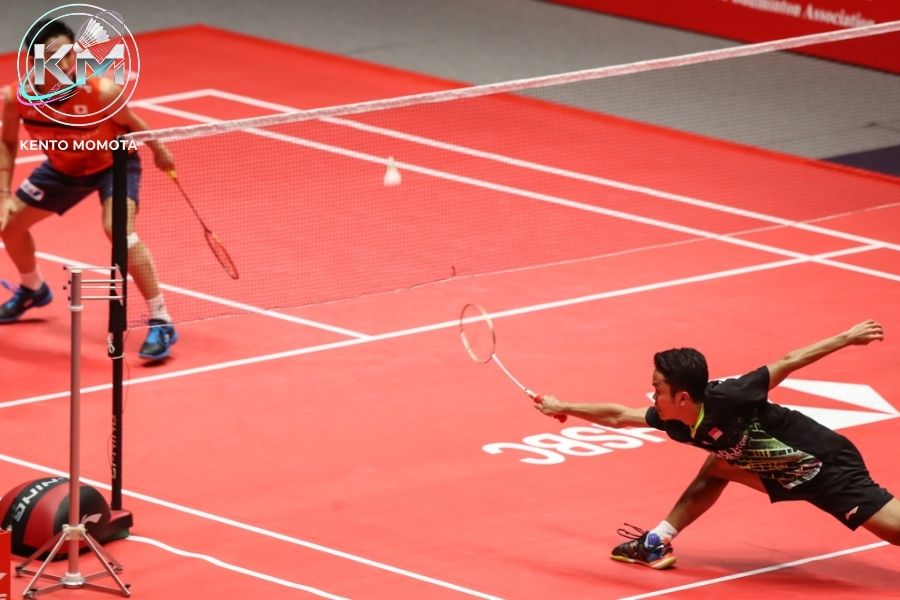
Kento Momota never had the fastest smash (peak 453 km/h vs Axelsen’s 493 km/h) or the tallest reach. What he had was the most precise badminton ever played – a style built on geometry, deception, and total court awareness.
Watch any of his 2019 matches in slow motion, and you’ll see it: every shuttle lands exactly where it needs to, every fake is perfectly timed, every movement is 0.2 seconds ahead.
That wasn’t talent alone. That was art.
If you’re interested in deeper numbers behind these rivalries, the Stats & Highlights category breaks down Momota’s records, match data, and peak-performance metrics in detail
